

Local Exhaust Ventilation: Why It's the Backbone of a Safer Workplace

If you run a workshop, factory, or any space where dust, fumes, or vapours are part of the daily routine, you've probably heard the term "local exhaust ventilation" thrown around. But what does it actually mean, and why should you care? At Ventxlabs Ltd, we work with businesses every day who are trying to figure out exactly that — so let's break it down in plain English.
What Is Local Exhaust Ventilation?
Local exhaust ventilation, often shortened to LEV, is a system designed to capture airborne contaminants right at the point where they're created — before they have a chance to spread into the room and get breathed in by your team. Think of it as catching the problem at the source rather than dealing with it after it's already filled the air.

Unlike general ventilation, which simply moves air around a whole building, LEV targets specific tasks or machines. A welding bay, a grinding station, a chemical mixing area — these are all places where an LEV system can make a huge difference to air quality.
Why Does It Matter So Much?
Workplace air quality isn't just a "nice to have." In many industries, it's a legal requirement under health and safety regulations. Breathing in dust, fumes, or chemical vapours over time can lead to serious health issues, from respiratory problems to long-term lung damage.
A well-designed LEV system protects your employees, helps you stay compliant with regulations, and honestly, it just makes the workplace a more pleasant place to be. Nobody wants to spend eight hours a day breathing in metal dust or solvent fumes.
Fume Extraction: A Closer Look
While we're talking about LEV, it's worth taking a moment to explain fume extraction separately, because it's one of the most common — and most misunderstood — applications.
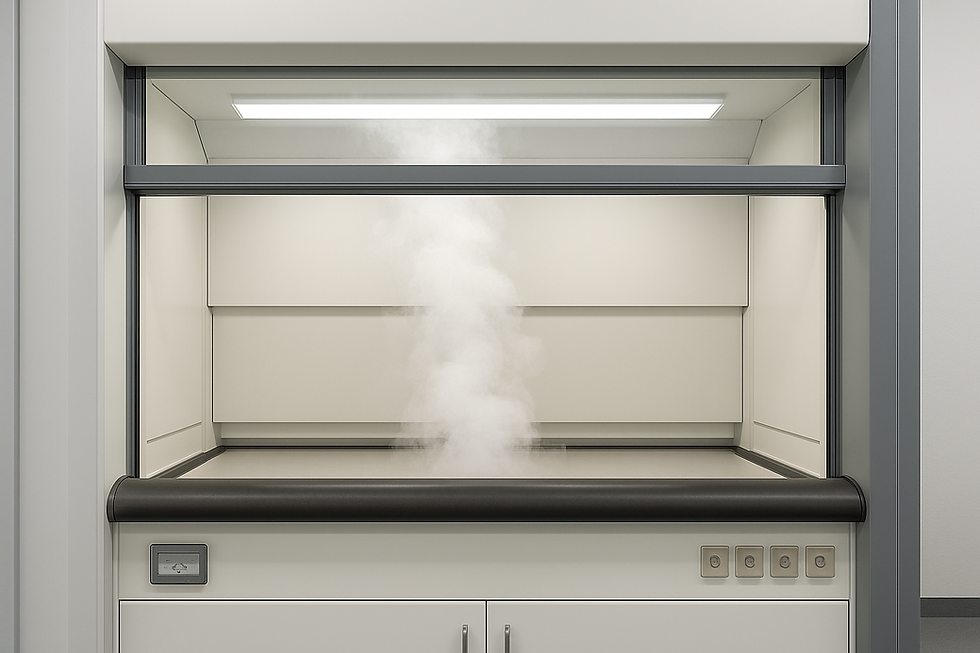
Fume extraction refers specifically to systems designed to remove gases, vapours, and airborne particles produced during processes like welding, soldering, laser cutting, or chemical handling. These fumes can be invisible to the eye but still harmful to breathe in, which is exactly why a dedicated extraction system is so important.
A typical fume extraction setup includes a capture hood or arm positioned close to the source, ducting to carry the fumes away, and a filtration unit that cleans the air before it's released or recirculated. Some systems are portable and can be moved between workstations, while others are fixed installations built into the layout of a factory floor.
The key difference between general LEV and fume extraction often comes down to filtration. Fumes frequently contain fine particulates or chemical residues that need specialised filters — things like HEPA filters or activated carbon — to make sure the air being released is genuinely clean.
Choosing the Right System for Your Business
Every workplace is different, and that's why a one-size-fits-all approach to local exhaust ventilation rarely works. The right system depends on a few key factors:
The type of contaminant being produced (dust, fumes, vapours, mist)
How much of it is generated and how often
The layout of your workspace and how many extraction points you need
Whether the air needs to be filtered and recirculated, or simply exhausted outside
At Ventxlabs Ltd, we start by assessing your specific environment before recommending a solution. There's no point installing an expensive system that's overkill for your needs — or worse, one that's not powerful enough to actually do the job.
Maintenance Matters Too
One thing people often overlook is that LEV systems need regular maintenance and testing to stay effective. Filters get clogged, ducting can develop leaks, and fan performance can drop over time. In the UK, there's also a legal requirement for many systems to undergo periodic examination and testing — known as LEV testing — to confirm they're still performing as they should.
Skipping this step doesn't just risk non-compliance; it can mean your system is quietly failing to protect your staff without anyone noticing until it's too late.
Final Thoughts
Local exhaust ventilation isn't just a box-ticking exercise — it's a genuine investment in the health of your team and the long-term smooth running of your business. Whether you need a simple extraction arm for a single welding station or a complete ducted system for a busy production floor, getting it right from the start saves you time, money, and headaches down the line.
If you're not sure where to begin, that's exactly what we're here for. Get in touch with Ventxlabs Ltd and we'll help you figure out the best setup for your space.
Frequently Asked Questions
1. What is the difference between local exhaust ventilation and general ventilation?
General ventilation moves air throughout an entire space, diluting contaminants over time. Local exhaust ventilation captures pollutants right at the source, before they spread into the wider room.
2. How often does an LEV system need to be tested?
In most cases, LEV systems should be examined and tested at least every 14 months, though some high-risk processes may require more frequent checks. Always check the specific requirements for your industry.
3. Is fume extraction the same as dust extraction?
Not quite. Fume extraction deals with gases and fine particulates from processes like welding or chemical work, while dust extraction is typically aimed at larger solid particles from cutting, grinding, or sanding.
4. Can a portable fume extractor work as well as a fixed system?
Portable units are great for smaller workshops or tasks that move around, but for high-volume or continuous processes, a fixed ducted system usually offers better long-term performance.
5. How do I know if my workplace needs local exhaust ventilation?
your processes produce dust, smoke, fumes, vapours, or mist that could be inhaled by workers, you likely need some form of LEV. A site assessment is the best way to confirm what's required.


Comments